Pair of Antique Carved Wooden Putti
Details: The beauty of unrestored, centuries-old decay
The Heritage Note
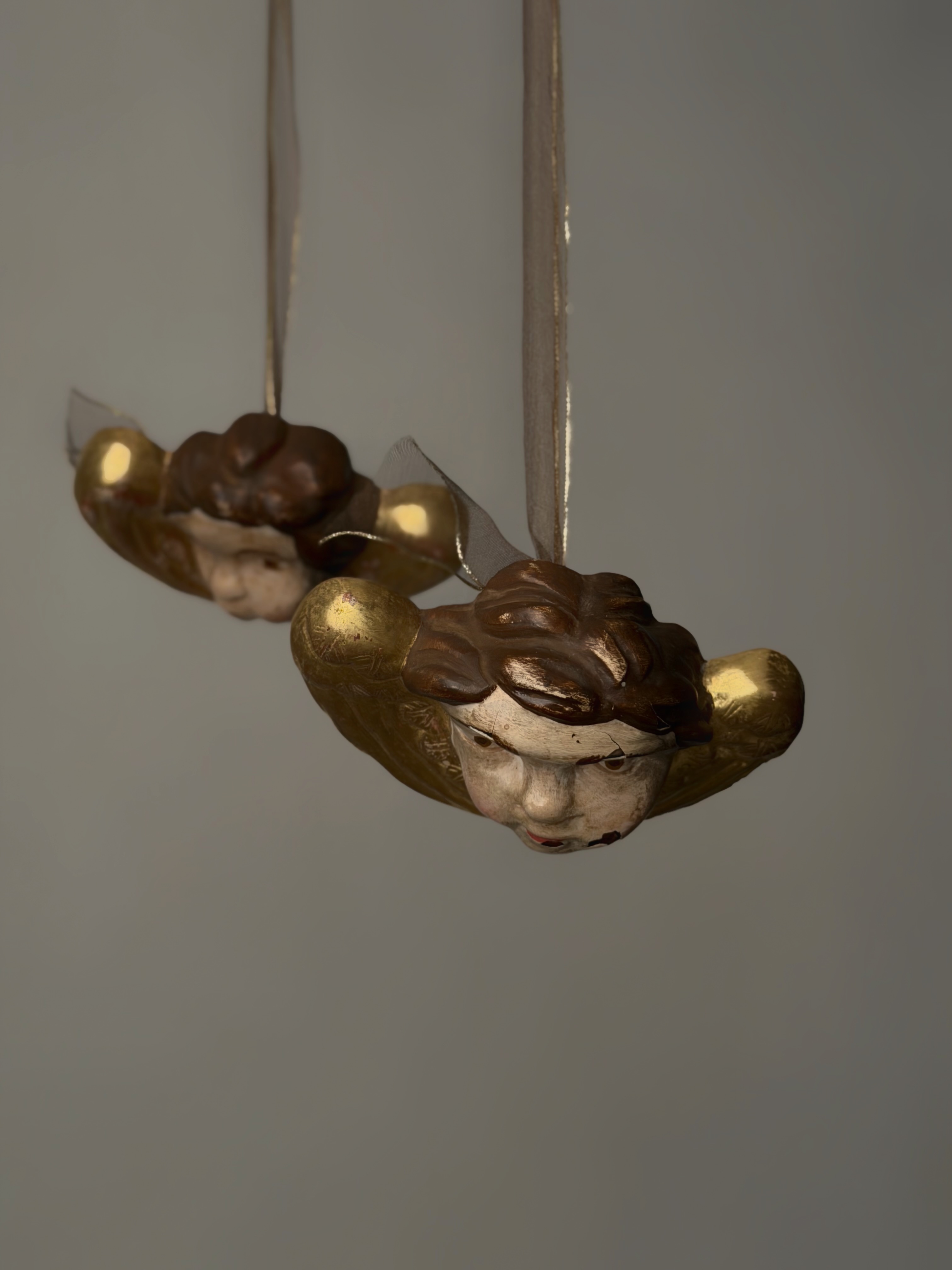
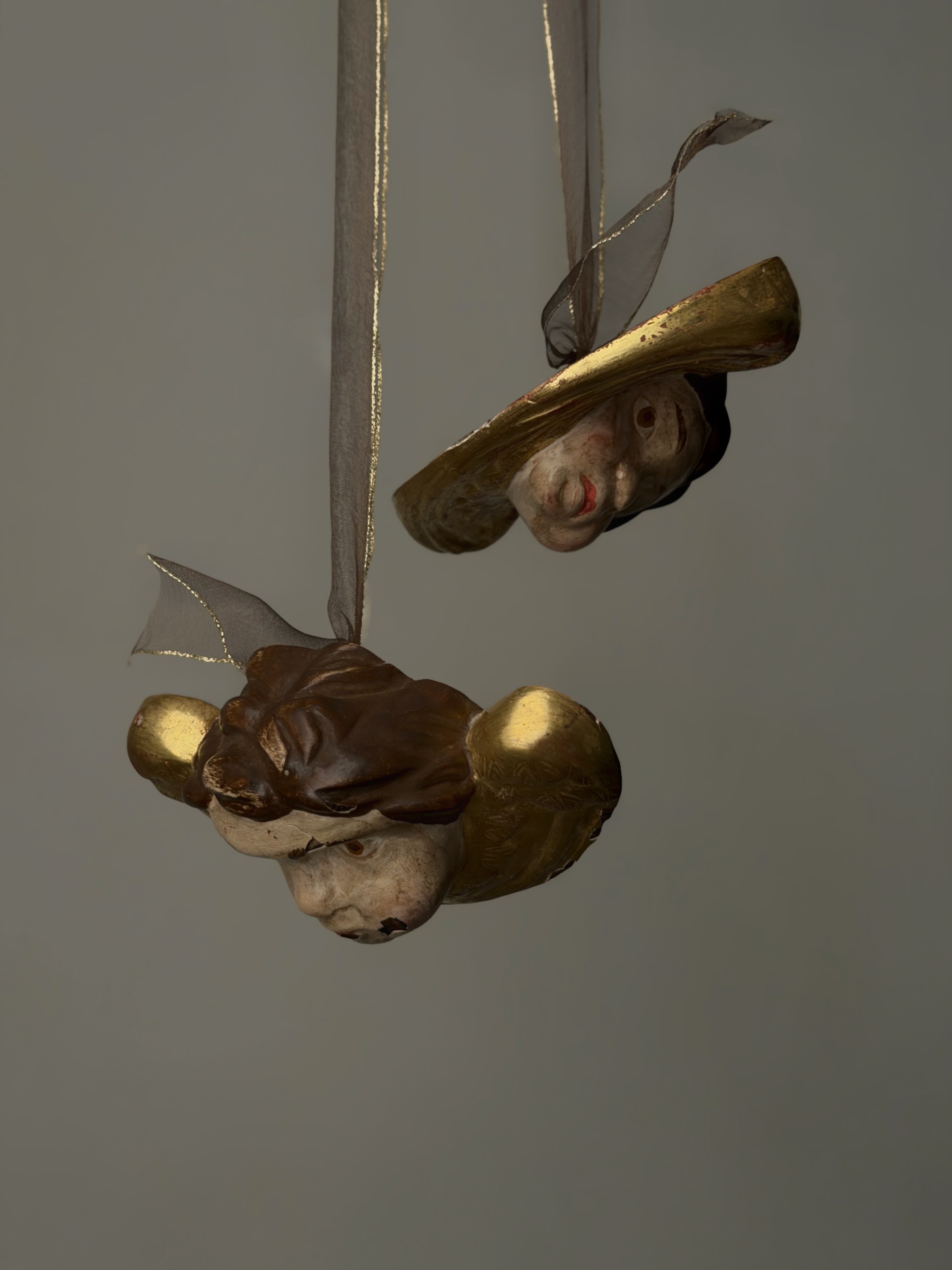
Discovered in the historic village of Eauze in the South of France, this exquisite pair of antique carved putti (cherub heads) represents a stunning survival of early religious or architectural artistry. Hand-carved from solid timber, they were once part of a much larger installation—likely adorning a provincial church altar or the gilded molding of a grand estate.
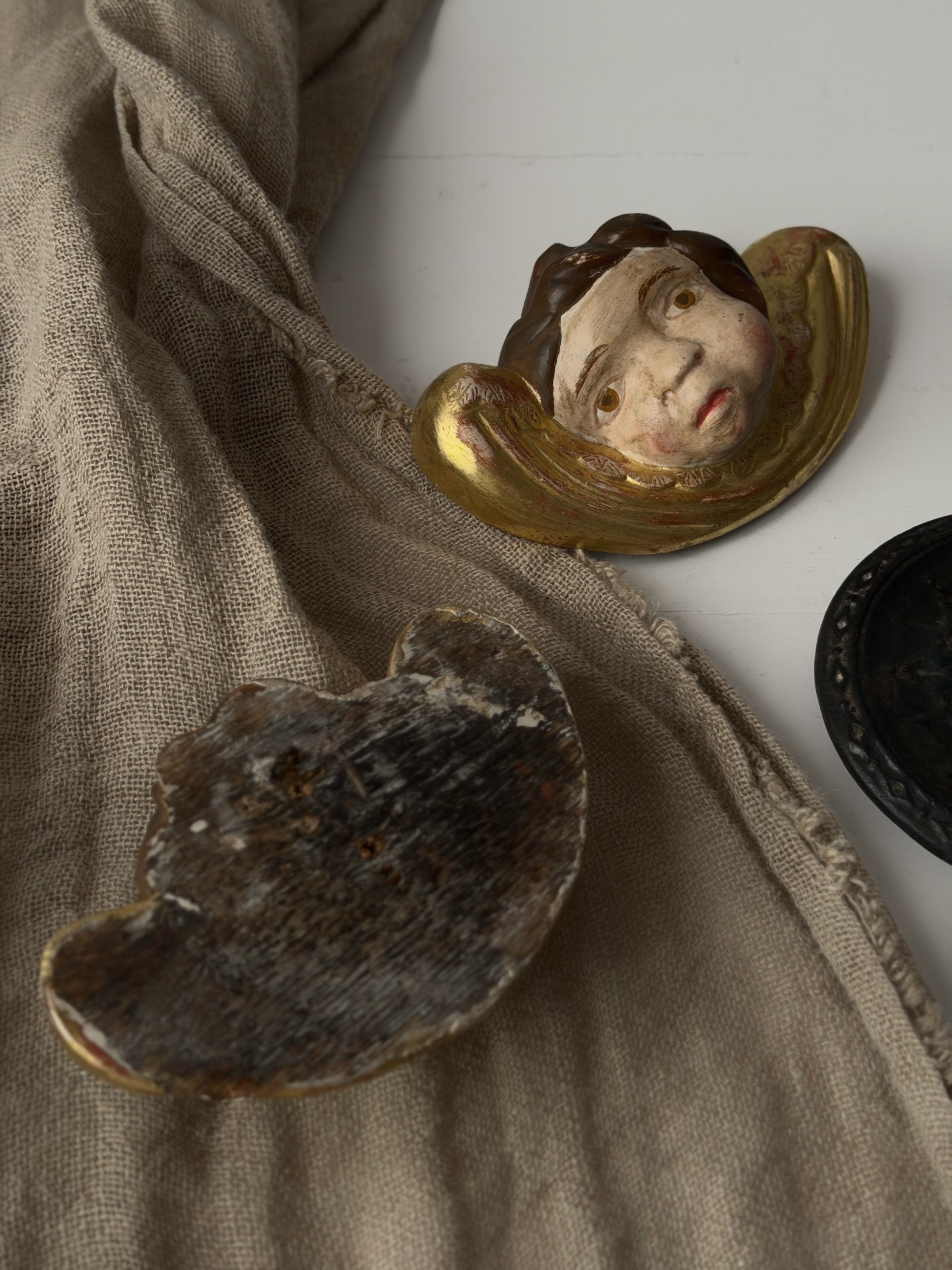
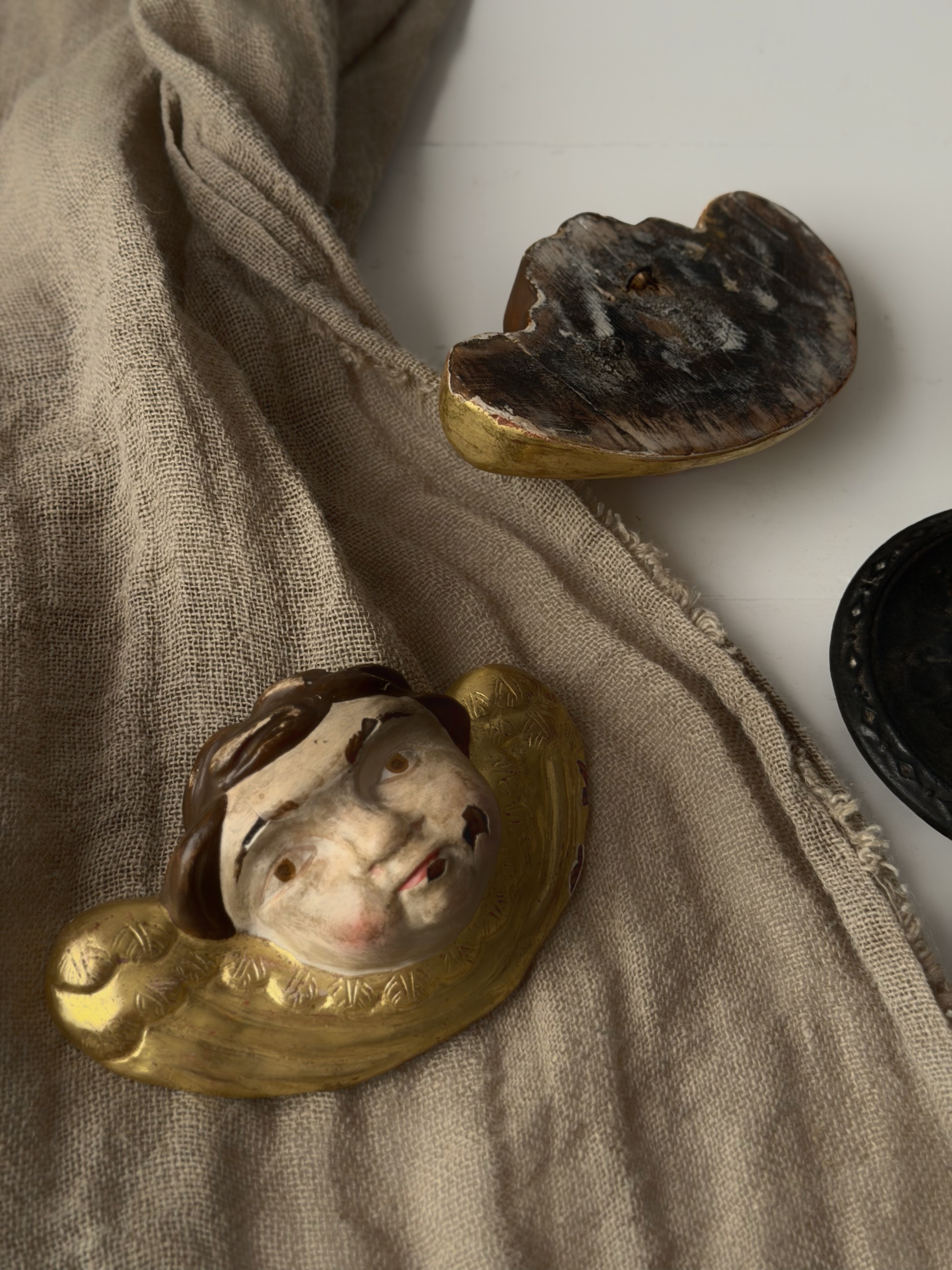
What makes this pair so extraordinary is their untouched condition. Over the centuries, their original polychrome painted faces and gold-leafed wings have heavily crazed and flaked, exposing the foundational layers of white gesso and raw, hand-hewn wood beneath. The flat backs of the carvings reveal the authentic, historical tool marks and inactive flight holes of an object that has endured hundreds of years.
Measuring 10 centimeters tall and 16 centimeters wide, and carrying a delicate combined weight of 0.15 kilograms, these winged figures possess immense sculptural presence. Whether suspended by ribbon to catch the afternoon light or resting gently atop a stack of antique books, they embody the highest form of romantic, time-worn elegance.
Provenance & Details
| Era | 18th / Early 19th Century |
| Origin | Eauze, South of France |
| Material | Hand-Carved Wood, Gesso, Polychrome Paint, Gold Leaf |
| Dimensions | 10cm Height x 16cm Width (Each) |
| Weight | 0.15 kg |
| Condition | Authentic architectural salvage. Bears heavy, beautiful losses to the original paint and gilding. The backs show historic, inactive woodworm marks, serving as a testament to their genuine antiquity. |